- Negotiations
The European Union and India launched negotiations on a bilateral free trade and investment agreement in June 2007. However, between the governments, a number of controversies have been plaguing the talks. Delhi wants Brussels to relax its stringent food safety criteria which penalise Indian farm and fishery exports and to make it easier for Indian professionals to work in the EU. Europe is primarily out to win major openings of India’s services sector and broad liberalisation of foreign investment, while India does not want to discuss allowing European firms to compete in India’s government procurement market.
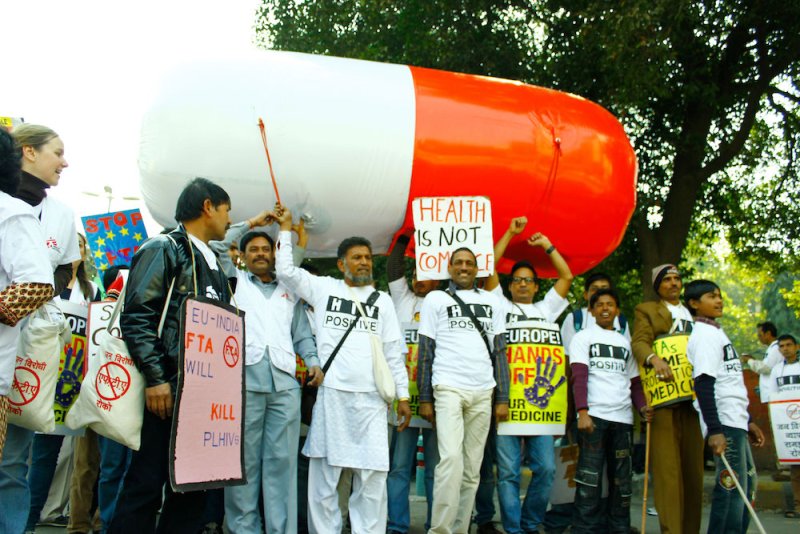
Indian social movements, including fisherfolk and labour unions, people living with HIV/AIDS and other health activists have been mobilizing against the FTA. International actions and campaigns have particularly targeted the proposed intellectual property provisions of the agreement, and the impact of the FTA on access to medicines.
last update: May 2012
Photo: MSF
13-Jun-2025
Business Standard
The focus of India and the EU negotiation is now on easing regulatory hurdles to facilitate smoother trade, especially for key Indian exports facing high EU barriers, such as chillies, tea, Basmati rice, and dairy products.
12-Jun-2025
The Economic Times
India and the EU concluded five chapters, including intellectual property and trade facilitation, during the 11th round of FTA talks in New Delhi. Discussions also addressed easing certification processes under India’s Quality Control Orders.
4-Jun-2025
The Economic Times
India and the European Union are likely to agree upon a comprehensive free trade agreement instead of an interim deal, an official said.
26-May-2025
The Economic Times
Commerce and Industry Minister Piyush Goyal has met European Commissioner for Trade Maros Sefcovic in Brussels, their second meeting within a month, to discuss the proposed free trade agreement.
22-May-2025
The Economic Times
Negotiations for a proposed trade pact between India and the 27-nation European Union are progressing at a faster pace and both the sides are looking at concluding the talks for an early harvest trade agreement by July this year.
21-May-2025
The Tribune
An Indian official team from the Commerce Ministry is expected to visit Brussels this week for the next round of negotiations on the proposed free trade agreement with the European Union.
19-May-2025
Business Standard
India and the European Union have completed the 11th round of negotiations on their proposed free trade agreement (FTA), agreeing to finalize the deal in two phases due to global trade uncertainties. The talks focus on market access for goods, services, and investment, with the EU seeking duty cuts on automobiles, medical devices, and other products, alongside stronger intellectual property protections.
12-May-2025
Business World
In an attempt to wind up the first phase of the pact as early as possible, India and the European Union chief negotiators will begin the next round of talks on the proposed free trade agreement from Monday.
5-May-2025
Financial Express
India urges the EU to address non-tariff barriers in FTA talks, emphasizing fair regulations amid concerns over CBAM and deforestation laws. Minister Piyush Goyal seeks inclusive, proportionate trade standards during Brussels visit ahead of key negotiations in May 2025.
2-May-2025
Financial Express
India and the EU are working towards a commercially meaningful trade deal to boost market access for goods and services. With talks gaining momentum, both sides aim to conclude the FTA by end-2025, reflecting global urgency for stable trade ties amid economic uncertainty.