El Área de Libre Comercio Euro-Mediterráneo (EMFTA, por sus siglas en inglés) es una zona de libre comercio en proceso de construcción a partir de la Declaración de Barcelona, un programa marco que fue adoptado en 1995. Se comenzó a construir paso a paso a través de una serie de TLC bilaterales (denominados Acuerdos de Asociación) entre la UE y cada uno de los Estados que bordean el Mar Mediterráneo, así como a través de los llamados TLC horizontales entre los países mediterráneos que no son miembros de la UE, tales como el Acuerdo de Agadir.
Los países en cuestión son Argelia, Egipto, Israel, Jordania, Líbano, Marruecos, Siria, Territorios Palestinos, Túnez y Turquía. (Libia está marginada del EMFTA como tal, pero la UE le ofrecerá negociar por separado un acuerdo bilateral de libre comercio e inversiones). Todos estos países, excepto los Territorios Palestinos, Siria y Turquía, firmaron acuerdos de asociación con la UE que entraron en vigor a finales de los años 90 y principios de los 2000.
Mucha gente tilda las ambiciones de la UE en pos de la construcción de esta “asociación” especial con los Estados del Norte de África y el Medio Oriente—que implica no solamente la liberalización del comercio y las inversiones sino asimismo profundas reformas políticas que en Bruselas denominan “aproximación” de las instituciones políticas y legales de otros países a las propias de la UE—tanto de imperialistas como neocoloniales. Esto cobra aún mayor importancia a la luz de los planes de Estados Unidos que pretende tejer un TLC EEUU-Medio Oriente (MEFTA, por su sigla en inglés), ya que ambas iniciativas compiten directamente entre sí.
Estaba previsto que el EMFTA se concluyera en el 2010. Sin embargo, el estudio de impacto en la sostenibilidad encargado por la UE ya prevé que el acuerdo implicará consecuencias sociales y ambientales negativas importantes. Para complicar aún más las cosas, el Presidente francés Sarkozy lanzó en julio de2008 la iniciativa de crear una Unión del Mediterráneo que incluiría solamente a los países que bordean el Mar Mediterráneo. Además, también se han planteado cuestionamientos respecto a por qué la UE no fusiona su iniciativa de un TLC Mediterráneo con su iniciativa de TLC con el GCC.
En septiembre de 2011, la Unión Europea anunció el comienzo de las negociaciones con Egipto, Jordania, Marruecos y Túnez. Pero las conversaciones en torno a los Profundos e Integrales Tratados de Libre Comercio (DCFTAs por sus siglas en inglés), comenzaron únicamente con Marruecos y Túnez pues Egipto y Jordania se han negado hasta ahora a iniciar tales negociaciones.
En 2010, la UE y Marruecos firmaron un tratado de comercio relativo a la agricultura (que cubre también las pesquerías). Los críticos han hecho notar que el acuerdo promoverá la explotación del disputado territorio del Sahara occidental, que los principales benefactores serán las compañías transnacionales y el rey de Marruecos, y que los campesinos en pequeña escala sufrirán con ese acuerdo.
La Corte Europea de Justicia dictaminó que el acuerdo de agricultura y el de las pesquerías con Marruecos no aplicaba para el Sahara occidental (en diciembre de 2016 y en febrero de 2018, respectivamente). Sin embargo, el Parlamento Europeo desecho el dictamen de la Corte y votó a favor de la aplicación de ambos acuerdos en el Sáhara Occidental, en enero y febrero de 2019, respectivamente.
En cuanto a las negociaciones de los DCFTA, con Marruecos se frenaron en 2014 pero se espera que se reanuden en 2019. En Túnez, las pláticas comenzaron oficialmente en 2016, se aceleraron en 2018 y en 2019.
Los DCFTAs impactan todos los sectores de la economía, incluida la agricultura, mediante la remoción de barreras arancelarias y no arancelarias. Son acuerdos “OMC” y de “nueva generación”: van más allá de la OMC (en la protección de la propiedad intelectual, la apertura de adquisiciones públicas, las reglas de competencia, etcétera) e imponen armonización de reglas (en este caso la adopción del sistema regulatorio europeo). También liberalizan la inversión, e incluyen mecanismos de solución de conflictos inversionista-Estados.
En Marruecos y en Túnez, muchas orgaizaciones de la sociedad civil, sindicatos, organizaciones agrícolas e incluso de comercio han expresado serias preocupaciones por las consecuencias que puedan tener en la situación económica, en la soberanía del Estado y en los derechos sociales y económicos. Otras voces rechazan totalmente tal acuerdo, considerado una imposición por el lado europeo. En Túnez, las movilizaciones contra el acuerdo las iniciaron los campesinos de algunas regiones, y otros activistas en Túnez, sobre todo urante la ronda de negociaciones de abril de 2019.
Marco Jonville (FTDES, en Túnez) contribuyó a este texto.
Última revisión: septiembre de 2019
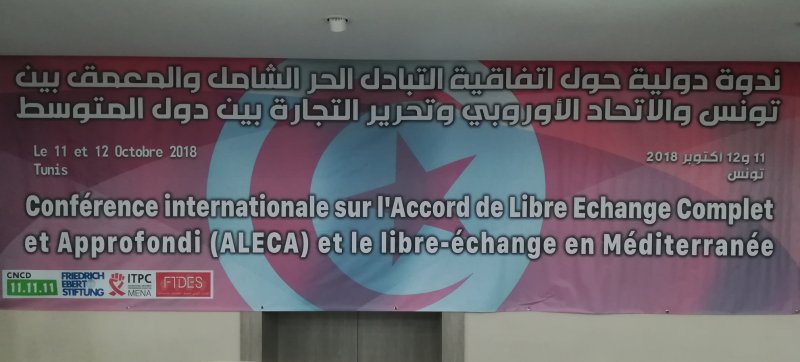
foto: bilaterals.org