bilaterals.org logo
bilaterals.org logo

investor-state disputes | ISDS

Investor-state dispute settlement (ISDS) refers to a way of handling conflicts under international investment agreements whereby companies from one party are allowed to sue the government of another party. This means they can file a complaint and seek compensation for damages. Many BITs and investment chapters of FTAs allow for this if the investor’s expectation of a profit has been negatively affected by some action that the host government took, such as changing a policy. The dispute is normally handled not in a public court but through a private abritration panel. The usual venues where these proceedings take place are the International Centre for Settlement of Investment Disputes (World Bank), the International Chamber of Commerce, the United Nations Commission on International Trade Law or the International Court of Justice.

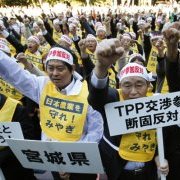
ISDS is a hot topic right now because it is being challenged very strongly by concerned citizens in the context of the EU-US TTIP negotiations, the TransPacific Partnership talks and the CETA deal between Canada and the EU.


Online protest delays EU plan to resolve US trade row
EU officials say the Commission is divided over how to draw conclusions from the public consultation it held on investor-state disputes under the proposed EU-US trade accord, which is now delaying negotiations.
Korea, US evaluate current state of FTA
The two sides discussed the adoption of appeal instead of a single trial in the Investor-State Dispute Settlement (ISDS) but failed to reach an agreement.
Protecting profits over people
Burma is in the process of formulating an investment law which would give investors full compensation if government regulations impact their profits
What “free trade” has done to Central America
Ten years after the approval of DR-CAFTA, we are seeing many of the effects that citizens who opposed the deal cautioned about., write Manuel Perez-Rocha and Julia Paley.
Europe-US free trade agreement faces risks
Europe’s proposed free trade agreement with the US would collapse if European leaders bowed to pressure to remove investment protection from any deal, the chairman of EU trade ministers said.
Investor-state dispute settlement and the China-Australia Free Trade Agreement
The Investment Chapter of the ChAFTA may be similar to the KAFTA’s with broad carve outs limiting the scope of claims that a foreign investor may bring against the host country and providing the parties with a discretion to regulate on ’public welfare’ objectives
Modalities for investment protection and Investor-State Dispute Settlement (ISDS) in TTIP from a trade union perspective
This study discusses the impact of investment protection on social and labour regulation and the autonomy of the social partners in regulating these matters through collective agreements.
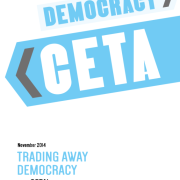
Canada-EU deal could unleash "corporate litigation boom’’
A new report warns that controversial investor protection rules in the proposed Comprehensive Economic and Trade Agreement (CETA) between Canada and the European Union could expose Canada to a new wave of corporate lawsuits that restrict the powers of all levels of governments.
Chinese corporations allowed to sue Australian government under free trade agreement
The deal struck between China and Australia on Monday will contain an Investor State Dispute Settlement mechanism that will allow Chinese corporations to challenge the Australian government for "pretty much anything", say academics
French government will not sign TTIP agreement in 2015
Matthias Fekl, France’s Secretary of State for Foreign Trade, has made it clear that France will not support the inclusion of the Investor State Dispute Settlement mechanism (ISDS) in a potential TTIP agreement.
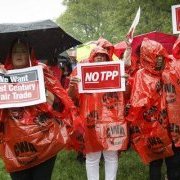
TPP deal not about trade, should be stopped
The Trans-Pacific Partnership threatens workers’ rights in the 12 nations negotiating the deal, say Communications Workers of America
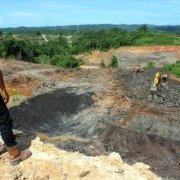
Netherlands – Indonesia BIT rolls back implementation of new Indonesian mining law: The case of Newmont Mining vs Indonesia
The case of Newmont Mining vs Indonesia is a powerful example of how investment agreements, particularly Bilateral Investment Treaties (BITs), are used by companies to get exemptions from government regulations and legislation, undermining democracy and development.
Malmström: Only minor adjustments to ISDS in trade deal with Canada
Only small changes can be made to an investment protection clause in a trade pact between Canada and the European Union, European Trade Commissioner Cecilia Malmström said on Monday (10 November).
Never mind ISIS, it’s ISDS that’s the real threat
If a “high-standard” ISDS is included in the Trans-Pacific Partnership, the results could be catastrophic, especially for the environment and people fighting to protect the environment.
EU-Japan FTA - open Letter to Commissioner Karel de Gucht
In an open letter Japanese & European groups call for transparency in the EU-Japan trade talks and removing the Investor-State Dispute Settlement mechanism (ISDS) from the Free Trade Agreement (FTA)
TTIP: new Commission divided over the future of ISDS in EU trade policy
Jennifer Baker is joined by Richard More O’Ferrall, spokesperson for the Greens Group, to discuss the future of trade negotiations between the European Union and United States under the new Juncker Commission.
TDM Call for Papers: CETA special
The editors of Transnational Dispute Management journal invite contributions to a special edition on CETA
Argentina strikes out in bid to undo $185M BG Group award
The Supreme Court on Monday shunned the republic’s latest appeal in a decade-long battle with BG Group plc, a British energy company that won a $185 million arbitration ruling against Argentina under a bilateral investment treaty.
Protecting Thailand from the hazards of international arbitration
The International Chamber of Commerce (ICC) has said Thailand is in urgent need of an arbitration law to facilitate settlements between Thai and foreign companies, so as to increase foreign investor confidence and prepare upcoming Asean Economic Community (AEC) next year.
Australian company sues El Salvador for its right to pillage
Australian-based company OceanaGold is suing El Salvador for US$301 million for its “right” to continue operating a gold mine that is destroying the Central American nation’s water supply.