24-Jul-2024
Ministry of Economy - UAE
23-Jul-2024
Bilaterals.org
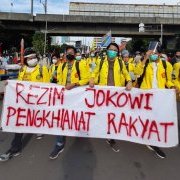
A total of 37 organizations and 29 people conveyed their urge to President Joko Widodo via open letter to stop negotiations between Indonesia - European Union Comprehensive Economic Partnership Agreement (I-EU CEPA). This demand was conveyed after Indonesia completed the 19th round of negotiations on 1-5 July 2024 behind closed doors.
9-Jul-2024
The Voice of Vietnam
Argentine Foreign Minister Diana Mondino has urged the Southern Common Market (Mercosur) to be more flexible in negotiations and seek free trade agreements with Vietnam and Indonesia.
4-Jul-2024
Indonesia AIDS Coalition
Indonesia for Global Justice (IGJ) and the Indonesia AIDS Coalition (IAC) criticized the I-EU CEPA, which hijacked the people’s rights to democracy while ignoring the negotiations’ wider impact. The I-EU CEPA negotiations lacked transparency, ignored public aspirations, and did not allow for meaningful participation from civil society groups.
11-Jun-2024
Business Times
Indonesia expects to conclude discussions on a free trade agreement with the Russian-led Eurasian Economic Union (EEU) in July, its chief economic minister said
27-May-2024
Jakarta Globe
Indonesia’s Chief Economic Affairs Minister, Airlangga Hartarto, stressed the need for fair treatment in trade negotiations with the EU. He emphasized Indonesia’s significant potential and its future as a developed nation by 2045. He called for fair treatment and added value for Indonesia’s economy.
27-May-2024
Yonhap News Agency
South Korea’s industry ministry said it has shared ideas with Indonesia on expanding bilateral cooperation in the development of a stable supply chain for key minerals. The two countries vowed to further utilize the bilateral Comprehensive Economic Partnership Agreement (CEPA), as well as global platforms such as the RCEP.