bilaterals.org logo
bilaterals.org logo

investor-state disputes | ISDS

Investor-state dispute settlement (ISDS) refers to a way of handling conflicts under international investment agreements whereby companies from one party are allowed to sue the government of another party. This means they can file a complaint and seek compensation for damages. Many BITs and investment chapters of FTAs allow for this if the investor’s expectation of a profit has been negatively affected by some action that the host government took, such as changing a policy. The dispute is normally handled not in a public court but through a private abritration panel. The usual venues where these proceedings take place are the International Centre for Settlement of Investment Disputes (World Bank), the International Chamber of Commerce, the United Nations Commission on International Trade Law or the International Court of Justice.

ISDS is a hot topic right now because it is being challenged very strongly by concerned citizens in the context of the EU-US TTIP negotiations, the TransPacific Partnership talks and the CETA deal between Canada and the EU.


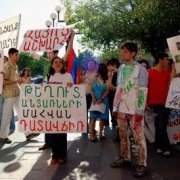
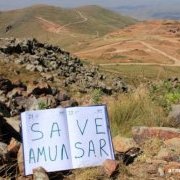
Weapons of legal destruction: ISDS lawsuits and Lydian International’s assault on Armenian sovereignty
The signing of an investment treaty involves a unilateral loss of sovereignty on the part of the host state, which is ultimately deemed necessary to attract foreign capital.
The Energy Charter Treaty (ECT): Assessing its geopolitical, climate and financial impacts
The Energy Charter Treaty is a multilateral agreement that grants binding protection for foreign investors and includes also binding provisions for free trade and freedom of transit of energy materials and products.
Suddenly, the world’s biggest trade agreement won’t allow corporations to sue governments
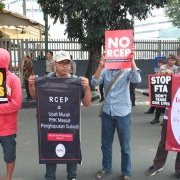
Malaysia’s trade minister Datuk Darell Leiking revealed that Malaysia and each of the other 15 parties to the RCEP negotiations had agreed to exclude ISDS provisions from the deal.
Netherlands faces ISDS threat after decision to ban coal-based power generation by 2030
German company Uniper has threatened to bring an ISDS case against the Dutch government after a decision to ban coal-based power generation by 2030.
Reko Diq, Karkey cases: Pakistan to challenge verdicts of ICSID: Omar
Pakistan government is going to challenge the verdicts of International Centre for Settlement of Investment Disputes (ICSID), said Minister for Power Division.
Luxembourg leads EU push to climate-proof Energy Charter Treaty
Critics say the Energy Charter provides excessive legal protection for oil and gas companies, which can claim uncapped reparations from governments who frustrate investments in fossil fuel projects.
Glencore awarded just $19 mln by tribunal in Colombia lawsuit
A World Bank tribunal has ordered Colombia to repay a $19 million fine it levied on Glencore’s coal mining subsidiary Prodeco.
Lydian’s gold project in Armenia faces yet another environmental review
Lydian International’s Amulsar gold project in Armenia may have to go through a fourth environmental review in less than a year.
Multi-billion dollar fine on Pakistan puts the spotlight on a secret court
The Reko Diq mine case shows the overreach of a secretive arbitration system.
Armenia gives go-ahead to gold mine blocked by green activists
Lydian had threatened to go to arbitration if forced to shut it down.
African states launch the operational phase of the African Continental Free Trade Area agreement, creating one of the largest common markets in the world
The AfCFTA entered into force on May 30, 2019 for all States that have ratified the Agreement. Trading under the agreement will begin on July 1, 2020.
TCC moves US court for enforcement of $6bn award in Reko Diq case
Tethyan Copper Company (TCC) has approached a court in the United States for enforcement of US$6 billion penalty imposed on Pakistan
Spain loses another dispute over premium cuts on renewables
Spain will have to pay EUR 41 million to German solar investor SolEs Badajoz GmbH for retroactively cutting long-term premiums for renewable energy projects.
More precious than gold: community resistance v corporate courts
UK registered mining company Lydian is using corporate courts to bully the Armenian government into cracking down on public protests that have successfully resisted a gold mine.
If a no-deal Brexit happens, mega corporations could sue the government for billions in secret courts
The Armenian government is currently being sued by a corporation for two thirds of its entire government budget. If the UK crashes out on 31 October, it could suffer a similar fate.
Concern grows over ‘corporate courts’ being set up after Brexit
Parliament’s trade committee says it is alarmed by government’s failure ‘to set out even basic lines of policy’ on how international arbitration will work after Brexit.
10th ISDS case against South Korea
Reportedly, Berjaya, Malaysian investor initiated ISDS dispute against South Korea.
Trade Minister of South Korea should not undermine the ISDS reform objectives pursued by the Prime Minister
CSOs call for Trade Minister of South Korea should not undermine the ISDS reform objectives pursued by the Prime Minister
Is NZ about to accept investment disputes in RCEP?
There is a high risk that New Zealand would still allow the investor to sue New Zealand in this expensive and discredited system of international investment arbitration

ReqoDiq Case II: Defending the Supreme Court
It is astounding that the Supreme Court judgment is being criticised due to an unfair award by the ICSID tribunal against Pakistan when that judgment is completely defensible.