bilaterals.org logo
bilaterals.org logo

investor-state disputes | ISDS

Investor-state dispute settlement (ISDS) refers to a way of handling conflicts under international investment agreements whereby companies from one party are allowed to sue the government of another party. This means they can file a complaint and seek compensation for damages. Many BITs and investment chapters of FTAs allow for this if the investor’s expectation of a profit has been negatively affected by some action that the host government took, such as changing a policy. The dispute is normally handled not in a public court but through a private abritration panel. The usual venues where these proceedings take place are the International Centre for Settlement of Investment Disputes (World Bank), the International Chamber of Commerce, the United Nations Commission on International Trade Law or the International Court of Justice.

ISDS is a hot topic right now because it is being challenged very strongly by concerned citizens in the context of the EU-US TTIP negotiations, the TransPacific Partnership talks and the CETA deal between Canada and the EU.


Hungary appeals Sodexo award with ICSID
Hungary has filed to annul an award of some EUR 73 million, before interest, to French food voucher company Sodexo, granted in an arbitration ruling by the World Bankʼs International Center for Settlement of Investment Disputes (ICSID), state news agency MTI reported, citing case information on ICSIDʼs website.
QICDRC sign deal to become hub for dispute resolution
Qatar International Court and Dispute Resolution Center (QICDRC) on Sunday entered into a pact with a World Bank body as part of plans to enhance its profile in the global judicial system and establish itself as a hub for dispute resolution.
Legitimacy concerns of the proposed multilateral investment court: Is democracy possible?
The EU wants to replace traditional party-appointed arbitrators with a two-tiered investment tribunal system comprised by a roster of members selected by the state parties on the treaty. This essay argues that the creation of the multilateral investment court needs to follow democratic principles in order to be legitimate.
Backlash against investor-state dispute settlement mechanism
Three investment cases brought against Bangladesh to the International Centre for Settlement of Investment Disputes by foreign investors largely curved the regulatory powers of Bangladesh for public purposes.
Mine owner takes govt to arbitration
Australian gold mining firm Kingsgate Consolidated is seeking negotiations with the new Thai government over the case in which it was ordered to cease mining operations in Phichit two years ago.
UN study shows more governments rejecting or limiting foreign investor-rights to sue governments (ISDS)
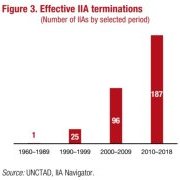
A new study of trade and investment deals concluded in 2018 by UNCTAD shows that most have either omitted ISDS altogether or severely limited its scope, reports AFTINET
Leaked report reveals ‘misfunctioning’ of Energy Charter Treaty amid EU reform calls
A confidential internal report, obtained by EURACTIV, lists the multiple failings of the Energy Charter secretariat, at a time when the treaty is undergoing a major revision process and is being used by Russia’s Nord Stream 2 pipeline in a first-time legal proceeding against the EU.
Tobacco and trade: an unhealthy and harmful marriage
The tobacco industry has a long history of using international trade deals to force their products into new markets.
Argentina to pay US$320m in damages over Aerolíneas nationalisation: court
The Cristina Fernández de Kirchner administration nationalised the airline in 2008, paying a symbolic one peso (30 US cents).
Trans-local mining activism connects Nevada and Guatemala in growing movement of resource nationalism
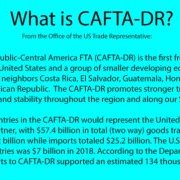
In December of 2018, KCA filed a $300 million-dollar arbitration claim against the government of Guatemala under CAFTA-DR.
UN reform needed to stop companies fighting climate rules: Nobel laureate Stiglitz
Multinational companies will increasingly file massive cases against host countries when climate change policies affect their profits, Nobel Prize-winning economist Joseph Stiglitz said.
Global anti-Chevron day objects corporate crimes and impunity
Thousands of demonstrators across all five continents have joined the International Anti-Chevron day to peacefully protest and display global crimes committed by the transnational company against human rights and the environment.
AU urges dispute settlement endeavors as AfCFTA edges closer to effect
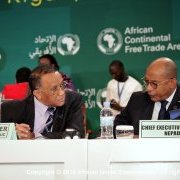
The African Union (AU) stressed the need to boost African countries’ capacity on both Investor-State Dispute Settlement (ISDS) and state-to-state dispute, as the African Continental Free Trade Area edges closer to entry into force.
Poland to hold high-level talks on Prairie Mining coal projects dispute -sources
Poland’s prime minister and other government officials will meet to discuss a threat by Australia’s Prairie Mining to sue Warsaw over difficulties it faced in developing coal projects
Mining companies use excessive legal powers to gamble with Latin American lives
In more than two-thirds of the mining-related lawsuits against governments in the region, communities have actively organizing against the mining activities.
New report exposes mining companies suing Latin American countries where communities defend land and environment
We analyzed 38 multi-million dollar claims brought by the mining industry using ISDS and other investment protection laws; in over half, communities are fighting to protect Indigenous territory, water, and more.
Canadian mining companies are behaving badly in the Global South—and Wall Street is profiting from it
Canadian investors have frequently used the ISDS system to pursue their commercial interests abroad—too often to challenge responsible government policies taken in the public interest in developing countries.

Compatibility with EU law is not real issue with ISDS
But legality should not be our main concern here. There are much better approaches to international investment and we should be considering them.
EU top Court misses opportunity to protect democracy in EU-Canada trade ruling
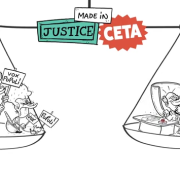
In a disappointing judgment, the Court of Justice of the EU (CJEU) has ruled today that the investment court system in the Canadian EU trade agreement (CETA) is compatible with EU law.
The ECJ verdict changes nothing – ISDS may not be illegal but it is immoral
The judgement is disappointing but The case against ISDS (or its rebranded version ICS) has never been primarily a legal one. It is a moral one.